When International Breaks Go Wrong: The Premier League's Strangest Club vs Country Stories
A look back at the strangest international breaks involving Premier League players, from injury disputes and club-country clashes to incidents that went far beyond the football pitch.

International football has a funny way of putting Premier League clubs in a difficult position. Liverpool once had a player whose back injury (We know, you know, wink wink!) became a talking point when he turned up for Brazil, while Tottenham and Aston Villa found themselves caught in the middle of a World Cup qualifier that Brazilian health officials stopped.
And that's before we get to players disappearing on international duty, managers accusing national teams of mishandling their stars, and the occasional row that turns into a full-blown diplomatic mess.
Here are some of the strangest international-break stories involving Premier League players!
Brazil vs Argentina: When health officials invaded the pitch
Imagine watching Brazil take on Argentina in a World Cup qualifier, only for health officials to interrupt the match five minutes after kick-off. That's exactly what happened in September 2021, and four Premier League players were at the centre of the controversy.
Aston Villa's Emiliano Martínez and Emiliano Buendía, along with Tottenham's Cristian Romero and Giovani Lo Celso, had travelled to Brazil with Argentina. The problem was that Brazil's COVID regulations required visitors arriving from the UK to quarantine for 14 days.

Brazilian authorities alleged that the players had breached those rules and provided false information about their travel history. Argentina disputed the accusations.
Rather than resolving the matter before kick-off, officials entered the pitch with the match already underway. Martínez, Romero and Lo Celso were playing, while Buendía was part of the travelling squad.
The scenes were extraordinary. Players surrounded the officials, Lionel Messi tried to understand what was happening, and Argentina eventually walked off. The match was abandoned.
You can imagine the reaction back in England.
Tottenham were already unhappy that Romero and Lo Celso had travelled, while Aston Villa had made arrangements for their players to represent Argentina. Now all four were caught up in an international incident, with quarantine restrictions complicating their return to club football.
FIFA subsequently sanctioned the four players for failing to comply with international match protocols.
It's hard to think of another international fixture where Premier League players travelled thousands of miles, barely got to play, and ended up at the centre of a dispute involving health authorities and football's governing bodies.
It was some mess.
Philippe Coutinho: The back injury that became a Liverpool headache
Ah yes, the infamous Coutinho back injury. The one that eventually helped him make his dream move.
Liverpool supporters will remember the summer of 2017 for Barcelona's relentless pursuit of Philippe Coutinho.
The Brazilian wanted to leave Anfield, Liverpool were determined to keep him, and the transfer saga had become increasingly messy.
Then came the back injury.
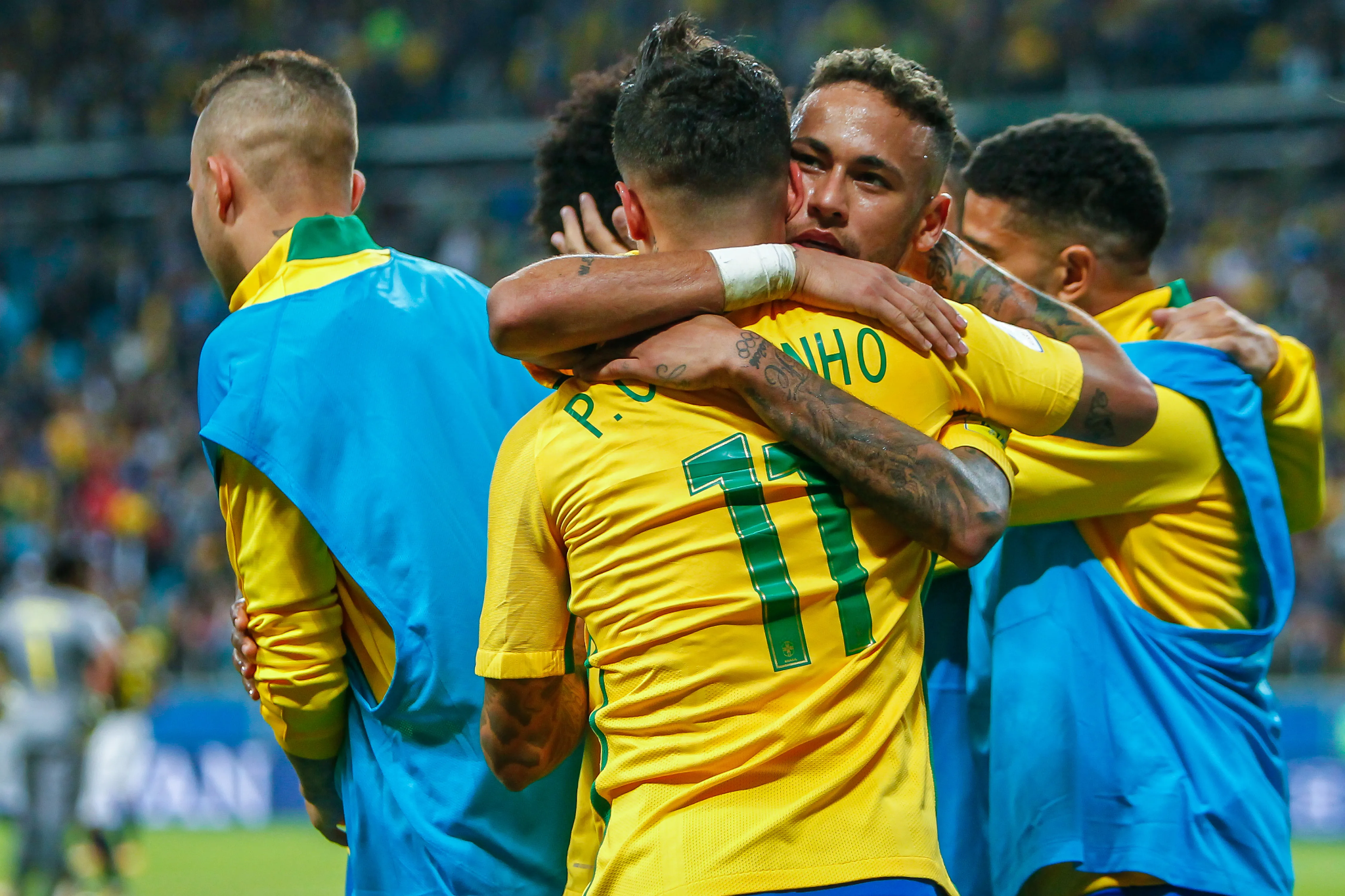
Coutinho missed Liverpool's opening matches of the season, with Jürgen Klopp maintaining that the midfielder was unavailable. Nothing particularly unusual there, except that Brazil called him up for their fixtures, and he went (cue the dramatic music).
Suddenly, the player who couldn't feature for Liverpool was training with his national team. He went on to make substitute appearances during the international break, including scoring against Ecuador.
Naturally, Liverpool fans had questions.
Brazil's medical staff suggested that emotional stress surrounding his uncertain future had contributed to his condition. That explanation did little to settle the argument; Liverpool fans knew it was all a ploy to get his move
Klopp refused to rush him straight back into Liverpool's side after the break, leaving him out of the squad for the trip to Manchester City.
Liverpool eventually kept him until January 2018, when Barcelona finally got their man. But Liverpool were also the biggest winners out of this whole ordeal, in hindsight.
Daniel Sturridge: One training session, and Brendan Rodgers had seen enough
Brendan Rodgers wasn't particularly pleased when Daniel Sturridge returned from England duty in September 2014.
The Liverpool striker had played 89 minutes against Norway and was following a specific recovery programme at club level. Under that routine, he would normally have a lighter session roughly 48 hours after a match.
Sturridge requested similar treatment while away with England.
Instead, he took part in regular training and suffered a thigh injury.
Rodgers believed the problem could have been prevented. He questioned why England had not followed the player's individual recovery programme, arguing that players with Sturridge's explosive pace required particular care.
Roy Hodgson's England staff had their own demands, of course. International managers get limited time with their players and must prepare them for competitive fixtures.
But Liverpool were the ones who had to deal with the consequences.
Sturridge missed several important matches, and the situation became even more frustrating when he suffered a separate calf injury while working his way back.
Rodgers was already dealing with injuries to Joe Allen and Emre Can following their respective international commitments. Having three players return with fitness problems was hardly his idea of a productive break.
The disagreement eventually became a public argument over training methods, player recovery and whether national teams should follow the medical programmes established by clubs.
All because Sturridge wanted a lighter training session.
Raheem Sterling: Too tired for England, but fit enough for a night out?
If Rodgers thought the Sturridge situation was frustrating, things were about to get even more complicated with another Liverpool player.
In October 2014, Raheem Sterling told England manager Roy Hodgson that he was feeling tired ahead of a European Championship qualifier against Estonia.
Sterling was only 19, but he had already been playing a considerable amount of football for Liverpool and England.
Hodgson decided to leave him on the bench, bringing him on during the second half of England's 1-0 victory.
That should have been the end of it.
Instead, Hodgson revealed Sterling's request publicly, and the teenager faced criticism for admitting he needed a rest.
The controversy was just round the corner because then came the nightclub story.

Reports emerged that Sterling had visited a London nightclub with fellow England players after returning from Estonia. Predictably, the headlines questioned how someone too tired to start an international match could still find the energy for a night out.
There was one rather important detail. Sterling had been given time off by Liverpool, had not broken club rules and had reported for training as expected. He was also reported to be teetotal.
Rodgers defended him, and Hodgson subsequently criticised the treatment Sterling had received.
Liverpool were once again left managing the fallout. It was a period when Liverpool were dealing with player issues left, right, and centre.
The international break when Premier League clubs said no
The Brazil-Argentina fiasco wasn't the only club-versus-country controversy caused by COVID restrictions in 2021.
Before that September international break, Premier League clubs collectively decided not to release players for matches in countries on the UK's travel red list.
The issue was straightforward enough. Players travelling to those countries would have faced mandatory quarantine on returning to England, potentially missing several domestic fixtures.
Liverpool were again among the clubs affected, with Mohamed Salah, Alisson, Fabinho and Roberto Firmino all caught up in the restrictions.
But this was no ordinary disagreement between a club manager and a national coach.
The Premier League's decision affected nearly 60 players from 19 clubs, while national associations and FIFA became involved in the wider dispute.
For the players, the situation was particularly awkward. They wanted to represent their countries, but their employers were reluctant to lose them for extended periods because of quarantine regulations.
Clubs had a legitimate concern about fixture congestion and player availability. National teams had competitive matches to play and were entitled to expect access to their players.
Neither side was particularly interested in giving way.
It was one of those rare occasions when almost the entire Premier League found itself on the same side of a club-versus-country argument.
Emmanuel Adebayor: When international duty became a matter of survival
What happened to Emmanuel Adebayor in January 2010 remains one of the darkest episodes involving a Premier League player.
Adebayor was playing for Manchester City and captaining Togo at the Africa Cup of Nations in Angola.
While travelling through the Cabinda region, the team's convoy came under attack from separatist gunmen.
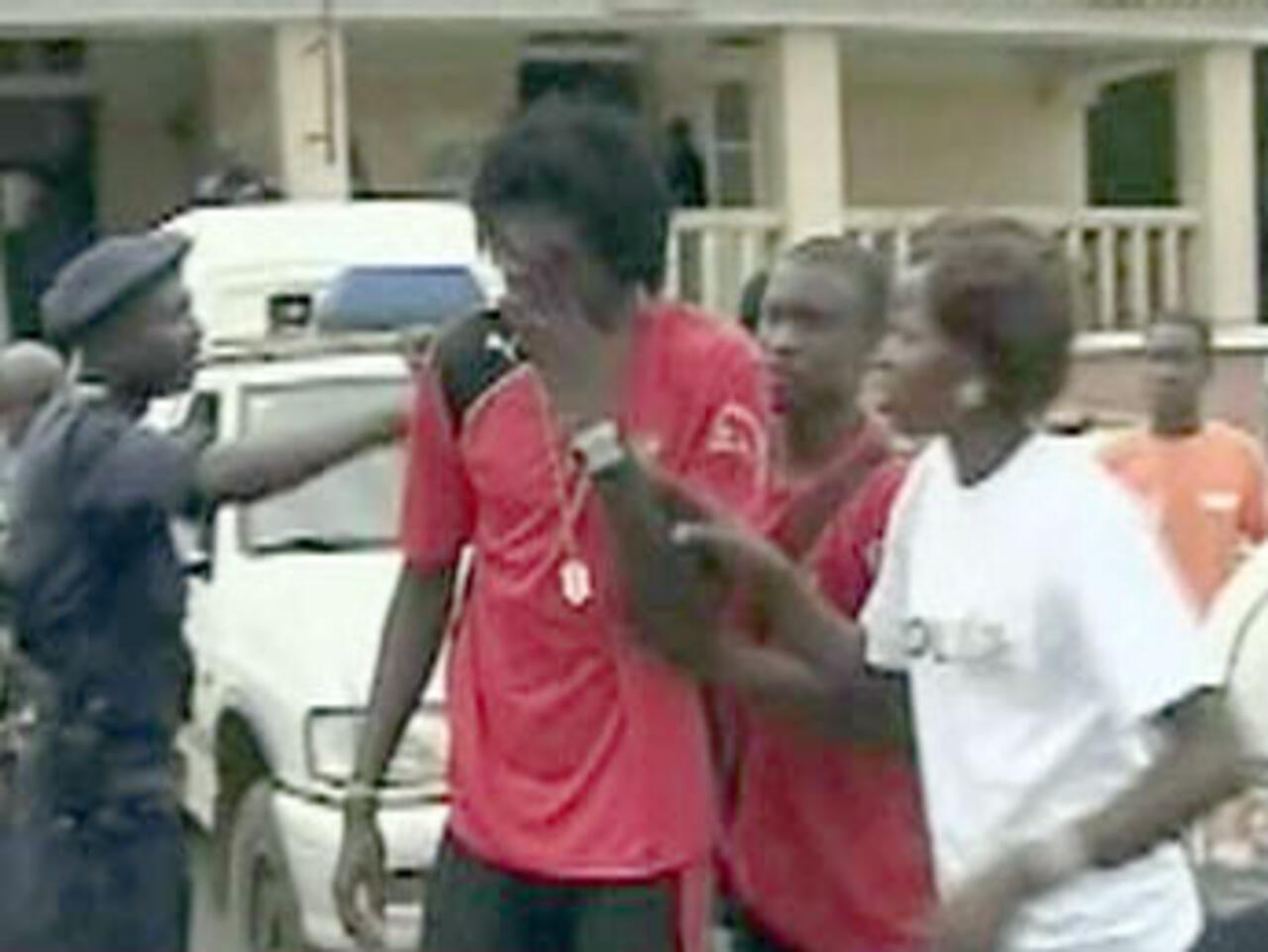
The shooting lasted around half an hour. Members of the delegation were killed, others suffered serious injuries, and the players were left fearing for their lives.
Adebayor survived, but the experience changed him.
Togo withdrew from the tournament, and Adebayor returned to Manchester City. The club provided psychological support as he attempted to resume his career.
He later announced his retirement from international football, explaining that the memories of the attack continued to haunt him.
Years later, Adebayor revealed that even ordinary sounds resembling gunfire could bring those horrific memories flooding back. It was a terrible experience to live through, and perhaps even harder to carry the trauma of it long after the attack was over.
Didier Drogba: When representing your country meant something much bigger
In October 2005, Ivory Coast qualified for their first World Cup after beating Sudan and benefiting from Cameroon's failure to defeat Egypt.
The achievement was enormous for a country divided by civil war.
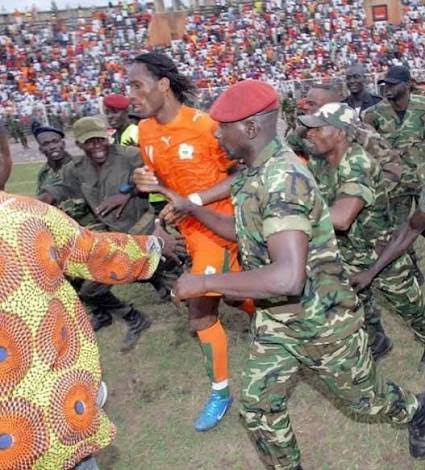
After qualification, Chelsea striker Didier Drogba gathered his teammates and made a televised appeal for an end to the violence.
The players urged their countrymen to put aside their differences, with Drogba becoming one of the most recognisable voices calling for peace.
The moment became part of a wider effort to bring the country together, although it would be an exaggeration to suggest that one footballer's speech ended the conflict.
Drogba continued to use his influence. In 2007, Ivory Coast played a qualifier against Madagascar in Bouaké, a city that had been a stronghold of the rebellion.
The match brought together people from opposing sides of the conflict and carried a significance that went far beyond the result.
For Chelsea, Drogba was a world-class striker. For Ivory Coast, he was turning into a messiah of peace.
Some things are more important than football, and Drogba tried to do that, and it worked.
Club or country: Who gets the final say?
The arguments haven't changed much over the years.
Clubs invest millions in their players and expect them to return fit enough to compete. National teams have limited opportunities to assemble their squads and understandably want their best players available.
Then there are the players themselves, caught between the people who pay their wages and the countries they have dreamed of representing.
Sometimes the disagreement involves an injury that one medical team considers manageable, and another considers too risky. Occasionally, as Coutinho discovered, the timing of an injury can create an entirely different controversy.
And every now and then, you get a World Cup qualifier stopped by health officials five minutes after kick-off.
With international football placing increasingly heavy demands on players, these arguments are unlikely to disappear. The next club-versus-country row probably isn't far away.
For the latest football stories, analysis and fan reactions, visit FanScanr.
Track 24/7 Supporter Sentiment Across Every Premier League Club
Explore Fan Mood Index (FMI), Delusion Score, Terrace Banter, and AI match predictions updated round-the-clock from real supporters.


